COVID-19 Update: MSEDP is operational and committed to responding to the needs of our customers.
COVID-19 Update: MSEDP is operational and committed to responding to the needs of our customers.
hello world!
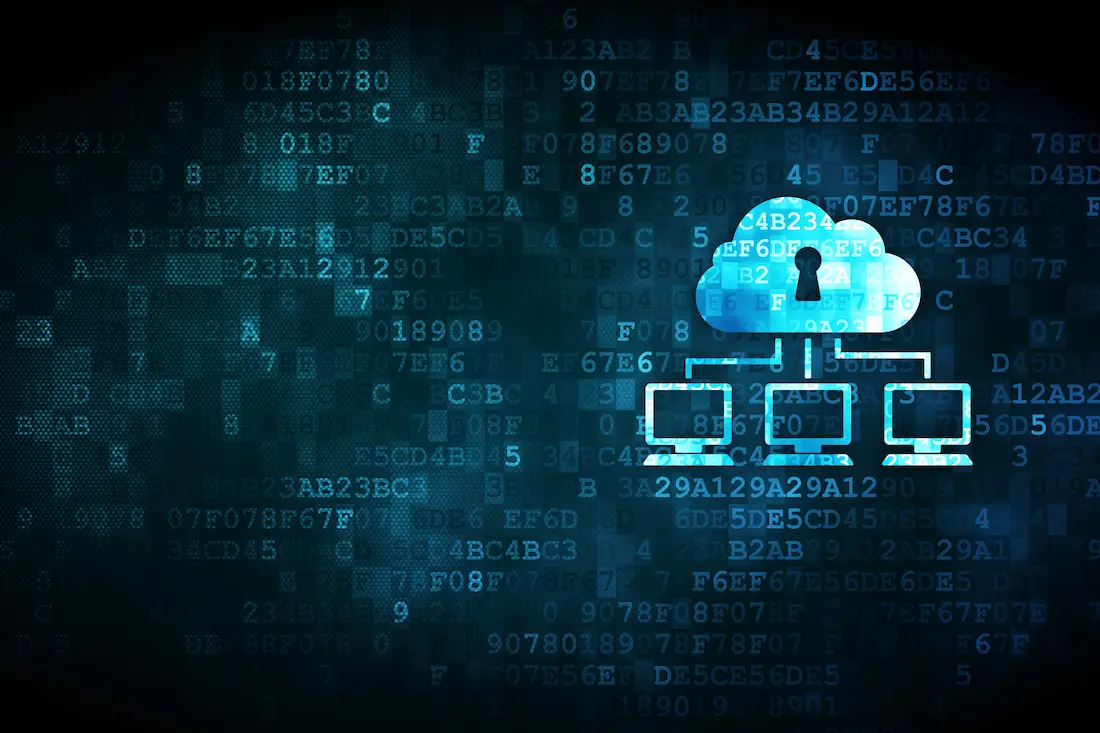
As of 2026, cloud computing has progressed well beyond basic online storage and remote hosting. It has become a sophisticated, interconnected ecosystem that supports nearly every area of modern business and technology. Today, cloud computing refers to delivering a wide range of computing services. These services include servers, storage, databases, networking, software, analytics, and AI capabilities over the internet. Rather than relying on local machines or on-site infrastructure, organizations now depend on scalable, distributed cloud platforms that are often enhanced with artificial intelligence. Key features of cloud computing in 2026 now include the following:
In 2026, cloud computing is no longer just IT infrastructure. It is the backbone of digital transformation. Businesses rely on it to run AI applications, process massive datasets, support remote and hybrid work, and innovate faster than ever. Turn to MSEDP today to get the most out of your cloud computing. Contact us today to learn more about cloud computing and its benefits for your business.
The classic IaaS, PaaS, and SaaS model still exists in 2026. However, now these models exist with modern enhancements:
Leading cloud providers now deliver solutions for nearly every need—from networking and email services to container management and serverless architectures. If your applications are delivered over the internet, cloud infrastructure is likely already central to your operations. For that reason, keeping up with the latest cloud computing trends in 2026 is more important than ever. Here are some of the more notable current trends in cloud computing.
Cloud computing trends for 2026 suggest that very few organizations will run AI workloads on their own infrastructure. This includes training custom large language models, deploying chatbots, powering recommendation systems, handling image recognition, performing natural language processing (NLP), or conducting predictive analytics.
For most use cases, cloud-based AI services offer a far more practical and cost-effective alternative to building and maintaining in-house systems. This efficiency is largely driven by the cloud’s pay-as-you-go model, which allows organizations to avoid heavy upfront hardware investments and instead pay only for the resources they consume, when they need them.
Overall, every organization has their own unique needs. And cloud computing trends show that some organizations use AI to optimize their sales development (SDR) pipelines, while others leverage it for business forecasting. This is where model training becomes important. Instead of relying on pre-trained, generic models, many companies now train custom ML models tailored to their data and objectives.
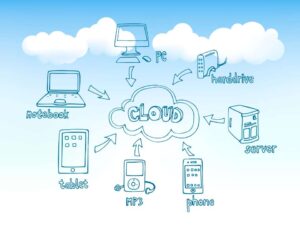 Even with a basic understanding of cloud computing, it’s clear there’s no single provider that fits every need. Still, organizations require a wide range of services. So, how do they handle this? The answer that has emerged is multi-cloud deployment, which is quickly becoming the standard approach.
That said, managing multiple platforms is far from simple. Challenges around policy enforcement, cost visibility, and governance remain significant. As a result, organizations are increasingly adopting automation tools and cloud management platforms from the outset to streamline operations.
At the core of the multi-cloud strategy are two key advantages: resilience and redundancy. If one provider experiences an outage or shifts its pricing, businesses can rely on alternative platforms to maintain continuity and avoid disruption. Ultimately keeping everything up and running without incident.
To meet the growing demand for cloud services, cloud providers continue to expand their infrastructure by building larger and more numerous data centers. Overall, an expected development in the industry. However, this rapid growth is beginning to strain the local environments where these facilities are located. Among the most significant impacts is the heavy use of groundwater, followed by increased energy consumption and emissions, and the accumulation of electronic waste.
Based on current cloud computing trends, monolithic architectures are quickly becoming a thing of the past. By 2026, the transition to cloud-native development is expected to be fully realized, with applications designed from the ground up using microservices, containers, and serverless technologies.
This approach enables faster scalability, simpler updates, and minimal downtime. With modern development tools on hand, teams can build, test, and deploy features independently, making the entire process more efficient and flexible.
Hybrid environments are a major trend in cloud computing for 2026, combining on-premises systems with public cloud platforms. This approach is gaining traction because it offers the advantages of both aspects. It has greater control over local infrastructure alongside the scalability and flexibility of the cloud.
Industries such as finance and healthcare are increasingly adopting hybrid models to meet regulatory requirements while still scaling efficiently. Sensitive data and critical workloads remain on-premises, while resource-intensive tasks are handled in the cloud, helping organizations stay agile while managing costs effectively.
Transmitting large volumes of data to centralized cloud servers for processing can introduce latency and increase costs. Edge computing addresses this challenge by moving computation closer to the source of the data, enabling faster and more efficient processing.
As a result, organizations benefit from quicker response times, lower latency, and reduced bandwidth consumption. Sectors such as logistics, manufacturing, and healthcare are already leveraging edge computing to support real-time decision-making without relying solely on distant cloud infrastructure.
For many organizations, cloud expenses are becoming a more significant part of overall budgets. As a result, cost optimization is no longer just a concern for engineering teams. It is also increasingly becoming a priority at the executive level and a key topic in C-suite decision-making. While issues like unoptimized architecture, improper rightsizing of resources, and incorrect billing models have always been relevant, the cloud computing trends with respect to key cost drivers in 2026 are as follows:
If you are looking for dependable, yet affordable, cloud computing services, turn to MSEDP today. Check out all of our IT services to learn more about how we can help your business.
© Copyright 2021 Mannino Systems. All Rights Reserved