COVID-19 Update: MSEDP is operational and committed to responding to the needs of our customers.
COVID-19 Update: MSEDP is operational and committed to responding to the needs of our customers.
hello world!

Google has recently published what many marketers have been waiting for: an official guide to optimizing websites for generative AI features in Google Search, which includes AI Overviews and AI Mode. After months of speculation, competing frameworks, and a lot of industry noise, we now have Google’s own guidance on what actually matters.
If your website has been following solid SEO fundamentals for years, then you’re on the right track. Google has also made it clear that some of the widely circulated “AI optimization tactics” simply are not necessary. Or at least necessary to the degree they are made out to be.
So, what did Google actually say, and what does it mean for SEO strategy as a whole? Let’s take a look in the blog post below.
With AI changing the way people search for information, it is natural to wonder whether traditional SEO still matters.
In short: absolutely it still matters.
Google has been clear that its generative AI features, including AI Overviews and AI Mode, are built on the same core ranking and quality systems that power traditional Google Search. What this means is that the work already created on a site that is technically sound, authoritative, and genuinely helpful is not going to waste. In fact, strong SEO fundamentals remain the foundation for visibility in AI-powered search.
What’s changing, however, is how Google finds, interprets, and combines information.
Two mechanisms are particularly important to understand: retrieval-augmented generation (RAG) and query fan-out.
When Google’s AI generates an answer, it does not simply rely on information from its training data. Instead, it can use Google’s Search systems to retrieve fresh, relevant content from its index. The AI then uses that information to construct a response, often with clickable links to the sources it referenced.
This is where traditional SEO continues to play an important role. If a website has high-quality content that Google can discover, understand, and retrieve for a relevant search, then those pages have an opportunity to become sources in AI-generated responses. In other words, ranking in traditional search and appearing in AI-powered results are not completely separate worlds. The quality, relevance, and accessibility of your content still matters.
AI-powered search also changes how Google processes a user's query. Instead of treating a question as a single search, the system can break it down into multiple related searches or sub-queries to build a more complete answer. Google refers to this process as query fan-out. For example, imagine someone searches:
“How do I fix a lawn full of weeds?”
Rather than looking for a single page that uses that exact phrase, the system could explore several related topics at once, such as:
This has an important implication for content creators since the content does not necessarily need to match the exact wording of the user’s original query to be relevant. Instead, it just needs to include any of the relative aspects of the search if there is useful information on the website.
The rise of AI search does not make SEO obsolete. Instead, it makes relevance, depth, and SEO content quality even more important. Instead of trying to optimize exclusively for specific keywords or exact-match queries, the focus shifts onto creating content that thoroughly addresses the questions and the needs surrounding a given topic. On top of that, strong technical SEO still matters in the long run. Authority still matters. And helpful, well-structured content still matters.
In general, the difference in the age of AI is that now the content may be discovered and surfaced through a much broader range of searches. Potentially becoming one of the sources Google uses to construct an AI-generated answer.
In the end, the fundamentals of SEO has not gone away. Instead, those fundamentals have simply evolved with the changing times. When you turn to MSEDP for professional SEO services, you get professionals who understand AI and its overall capabilities. And our SEO experts can craft content for your website that uses traditional SEO methods to rank both organically and within the new AI landscape.
If you’ve spent any time reading about the future of search, you have probably noticed a growing list of new acronyms: SEO, AEO, GEO, AI SEO, LLMO, and more.
The terminology can make it seem as though marketers need to learn an entirely new discipline every time search technology evolves. However, according to Google, the reality is much simpler.
Google’s guidance does not treat Answer Engine Optimization (AEO) or Generative Engine Optimization (GEO) as completely separate disciplines from SEO. Instead, they can be understood as different ways of applying established search optimization principles to newer search experiences. That distinction matters because it changes how you should approach your strategy.
Rather than creating one SEO strategy for traditional search and an entirely separate “AI optimization” strategy, it makes more sense to build a strong search foundation that works across different ways users discover information. Such as expanding on content and making sure the site offers expertise on a given subject.
Search Engine Optimization (SEO) is the broad discipline of improving a website so that search engines can discover, understand, evaluate, and surface its content for relevant searches.
Traditional SEO encompasses areas such as:
The goal here is not simply to rank for as many keywords as possible. Good SEO is about making your content useful and accessible to both users and search systems. Those fundamentals continue to matter as search becomes more AI-driven.
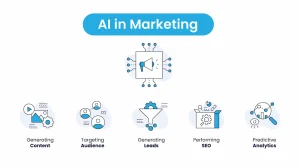 Answer Engine Optimization (AEO) generally refers to optimizing content so that it can be surfaced when search engines or answer-focused systems provide direct answers to users. Instead of thinking only about:
“How do I rank for this keyword?”
AEO encourages a broader question:
“How can I clearly and accurately answer the question behind this search?”
That can mean structuring content around common questions, providing concise explanations, using descriptive headings, and making important information easy to identify and understand.
For example, a traditional SEO approach might target the query:
“How often should I water a lawn?”
An AEO-oriented approach might organize the content around related questions:
Ultimately, the underlying SEO principles have not disappeared. The SEO content is simply being structured to make the answers more accessible. And formatting web pages properly sets a website up for success.
Generative Engine Optimization (GEO) is a newer term to describe efforts on improving a brand or website’s visibility within AI-generated search experiences. How it works is that instead of focusing exclusively on traditional rankings, GEO considers how content may be discovered, interpreted, summarized, and cited by generative AI systems. For example, someone might ask an AI-powered search engine:
“How do I get rid of a termite infestation?”
The resulting answer could synthesize information from multiple sources rather than simply display a long list of webpages with relevant information. For content creators and marketers, this creates another visibility opportunity: having their content used as a source within the generated response. However, this does not necessarily mean there is a completely new set of technical rules that replaces SEO. Just that those rules are being applied differently.
Google’s guide didn’t land without debate, but it is accurate within its stated scope. Ranking in Google Search, which includes AI Overviews and AI Mode, still relies on many of the same foundational signals that have always mattered. But the guide is also, by definition, focused on Google’s own products. It does not address how brand visibility is being shaped across the broader discovery ecosystem.
In a nutshell, the definition of “search” has expanded for all businesses. And the most important reframe in all of this is that search is not just a channel. It’s a brand visibility function. Overall, this distinction has real implications. A channel is something you allocate budget to, manage independently, and measure in isolation. A brand visibility function touches PR, communications, customer experience, community, content, and brand strategy all at the same time. So, this changes how to make the case for headcount. And it changes what the SEO team’s role looks like and the metrics found.
In practice on a website, this means closer collaboration between SEO, PR, communications, and community teams. It also means investing in the third-party platforms that influence your audience. These platforms include YouTube and Reddit, as well as industry publications, communities, and wherever else users are actually discovering information and forming opinions.
On top of that, it also means SEO needs a seat at the table for broader brand strategy conversations that it may not have previously been part of. If your business or organization still thinks of SEO primarily as a traffic channel with its own budget line, this is the moment to broaden that conversation.
None of this contradicts Google’s guide. In fact, it extends it as the fundamentals Google describes are the floor, not the ceiling.
At its core, Google’s official AI optimization guidance is a reaffirmation of principles that good SEOs have believed for years, which is to build useful things for real people. Make them technically accessible. Establish genuine expertise and authority. And do not try to game the system with shortcuts.
Now let's discuss what has changed, which is the context in which those fundamentals operate. AI Overviews and AI Mode are changing how answers are delivered, how information is discovered, and how traffic flows. Sites with distinctive expertise, strong technical foundations, and genuine authority are better positioned to participate in that new discovery environment. Sites built primarily around volume, keyword manipulation, or shallow content face greater exposure as search becomes more answer oriented.
So the question for any SEO team now is not, “How do we optimize for AI?” No, it is the more fundamental question of “How do we become the kind of source that AI systems want to cite?”
That’s a content strategy question and a brand-building question. It is also a technical SEO question. And ultimately, it’s a business quality question. The companies that understand this shift will not abandon SEO fundamentals. They will recognize that those fundamentals now operate within a much broader brand visibility ecosystem. And if your organization has not started making that shift yet, it’s worth taking seriously now. MSEDP is proud to be on the forefront of AI search and our team is doing everything possible to set our clients up to succeed. If you would like to learn more about our MSEDP can be your partner for the future in AI searches, please contact us today.
© Copyright 2021 Mannino Systems. All Rights Reserved