COVID-19 Update: MSEDP is operational and committed to responding to the needs of our customers.
COVID-19 Update: MSEDP is operational and committed to responding to the needs of our customers.
hello world!
Cybersecurity is no longer something businesses can afford to address only after a problem occurs. Companies rely on computers, networks, cloud applications, email, and connected devices every day, making IT security an essential part of keeping business operations running smoothly. One of the most effective ways to identify potential weaknesses is through vulnerability scans, especially when vulnerability management is incorporated into a comprehensive IT managed services strategy.
A vulnerability scan can help identify weaknesses in a network, systems, applications, and devices before they are exploited. Managed IT services take that proactive approach a step further by providing ongoing monitoring, maintenance, security management, and technical support. Together, vulnerability scanning and managed IT services can give businesses a more complete approach to identifying and addressing technology risks.
As part of the cyber security services at MSEDP, we provide in-depth vulnerability scans. Both your external and internal networks receive this scan. At the end of our assessment, we will provide you a very detailed report that includes all findings. Looking for professional vulnerability scans? Please reach out to us today.
A vulnerability scan is a cybersecurity assessment designed to identify known weaknesses in computers, networks, applications, servers, and other technology systems. By scanning an organization's IT environment, security professionals can identify potential vulnerabilities before they are exploited by cybercriminals.
Vulnerability scanning can uncover a variety of security issues, including outdated software, missing security patches, misconfigured systems, weak security settings, exposed network services, and other vulnerabilities that could create an opportunity for unauthorized access. Identifying these issues early gives businesses an opportunity to address potential security risks before they result in a data breach, malware infection, system disruption, or other cybersecurity incident.
For businesses of all sizes, vulnerability scanning is an important part of maintaining a strong cybersecurity posture. As companies add new computers, applications, cloud services, network devices, and remote users, their IT environments can become increasingly complex. New vulnerabilities can also be discovered over time, making ongoing assessment and vulnerability management an important part of a proactive IT security strategy.
A vulnerability scan provides valuable information about where weaknesses may exist, but the scan itself is only one part of the process. The results should be reviewed by qualified IT and cybersecurity professionals who can determine the severity of each vulnerability, prioritize the most important risks, and recommend appropriate remediation. Addressing vulnerabilities may involve applying security patches, updating software, changing configurations, strengthening security controls, or taking other corrective measures. At MSEDP, we have those qualified professionals to handle these tasks with ease.
Even businesses with firewalls, antivirus software, and other security tools can have vulnerabilities that are difficult to identify without a dedicated assessment. Technology changes constantly, and new software, devices, users, and network configurations can introduce additional security risks.
Regular vulnerability scans can help businesses:
Vulnerability scanning should not be viewed as a one-time project. Businesses benefit from making vulnerability management part of an ongoing cybersecurity program. Let MSEDP be your partner and improve your day-to-day business operations with our trusted IT services and vulnerability management. We help businesses not only on Long Island, but across the United States.
 A vulnerability scan can tell you where weaknesses exist, but businesses also need a way to address those weaknesses. This is where MSEDP's managed IT services can play an important role.
A managed service provider, or MSP, can continuously monitor and maintain a company's technology environment. MSEDP's managed IT services include system monitoring, maintenance, troubleshooting, security patching, malware prevention and remediation, help desk support, and regular reviews of system logs and reports.
When vulnerability assessments are combined with ongoing IT management, businesses can move from a reactive approach to a more proactive one. Instead of waiting for a security incident or system failure, an IT team can identify potential issues, determine which risks should be addressed first, and help maintain the systems over time. Become proactive with MSEDP today.
The appropriate frequency of vulnerability scans and assessments depends on the size and complexity of a business's network, its industry, compliance requirements, technology environment, and risk profile. Organizations that frequently add devices, applications, remote users, or network changes may benefit from more frequent assessments.
Businesses should also consider performing additional vulnerability assessments after significant changes to their IT environment. New servers, applications, network equipment, cloud services, or major software changes can introduce new risks. For organizations with ongoing security requirements, vulnerability scanning should be part of a broader vulnerability management process rather than treated as an isolated security task. If you are unsure of how to best handle vulnerability scans and assessments, the IT team at MSEDP can lead the way.
Some businesses are required by customers, vendors, regulators, or government contracts to meet specific cybersecurity or compliance requirements. Vulnerability assessments can be an important component of these programs.
However, compliance and security are not exactly the same thing. Meeting a compliance requirement does not necessarily mean that every potential security risk has been eliminated. Businesses should use vulnerability assessments as an opportunity to identify and address weaknesses while also meeting applicable security requirements.
MSEDP works with businesses on Long Island and across the United States that have cybersecurity compliance requirements and provides vulnerability assessments, security services, SIEM and log management, and other managed cybersecurity solutions. Join our team today!
Vulnerability scanning and managed IT services serve different purposes, but they work well together.
A vulnerability scan provides a snapshot of potential weaknesses in a technology environment. It helps answer questions such as:
Managed IT services, on the other hand, provide ongoing technology management. Managed services can include monitoring, maintenance, patch management, technical support, cybersecurity, backup management, and other IT functions.
In other words, vulnerability scanning helps identify potential problems, while managed IT services can help businesses continually manage and improve their technology environment. The good thing is with MSEDP, we have you covered on all fronts.
Cyber threats continue to evolve, and businesses need to understand where their technology may be vulnerable. Vulnerability scans and IT managed services provide two complementary pieces of a proactive security strategy.
A vulnerability assessment can uncover weaknesses that may otherwise go unnoticed, while managed IT services can provide the ongoing monitoring, maintenance, patching, and support needed to keep technology secure and operational.
If your business has not recently completed a vulnerability assessment, or if you are looking for a managed IT services provider to take a more proactive approach to your technology and cybersecurity, MSEDP can help. Located in Deer Park, New York, MSEDP provides managed IT and cybersecurity services for businesses on Long Island and supports clients nationwide.
Managing cybersecurity internally can be challenging, particularly for small and midsized businesses that do not have a large IT or security department. Managed IT services provide access to experienced technology professionals without requiring a business to build an entire internal team.
MSEDP's managed services include 24/7 system monitoring, help desk support, maintenance, troubleshooting, security patching, and cybersecurity management. Its managed cybersecurity services also incorporate vulnerability monitoring and management and other security solutions.
The goal is not simply to respond when something breaks. A proactive managed IT strategy helps businesses identify issues earlier, maintain their technology environment, and continuously improve their security. Contact us today to learn more about all the possibilities of having MSEDP on your side for all things IT.
An IT disaster recovery plan (DRP) is a documented strategy that outlines the processes, responsibilities, and procedures needed to restore an organization's IT infrastructure, systems, and critical data after an unexpected disruption. As a key component of a broader Business Continuity Plan (BCP), a disaster recovery plan helps organizations resume normal operations as quickly and safely as possible following a cyberattack, natural disaster, hardware failure, or other emergency.
Creating a disaster recovery plan is only the first step. Regular testing and updates are essential to verify that recovery procedures work as intended and that IT teams can respond effectively to a variety of disaster scenarios. Routine exercises also help identify weaknesses and ensure the plan remains aligned with changes in technology and business operations.
Since disasters can occur without warning, organizations should establish a disaster recovery plan before an emergency happens. A well-prepared plan minimizes downtime, reduces operational disruptions, and helps protect business continuity. It can also lower financial risk, support regulatory compliance, reduce potential legal exposure, and demonstrate to customers and stakeholders that the organization is prepared to respond to unexpected events.
For most organizations, data is among their most valuable assets. Customer records, financial information, employee files, research data, business documents, and communications often represent years of work and are critical to daily operations. Losing access to this information, even temporarily, can have significant financial and operational consequences.
The true cost of a disaster extends beyond replacing damaged hardware. Prolonged system outages can reduce employee productivity, interrupt customer service, delay projects, halt online sales, damage a company's reputation, and result in compliance penalties or contractual losses. By planning ahead, organizations can significantly reduce recovery times and limit the overall impact of an unexpected event.
In the most severe situations, a comprehensive IT disaster recovery plan can be the difference between a temporary setback and a long-term business failure. Investing in disaster recovery planning helps protect critical assets, maintain customer confidence, and ensure the organization is prepared to recover when it matters most.
Every business needs a disaster recovery plan that is unique to its own data requirements. To define the best approach for your business, you must weigh the value of your data, systems, and applications against the risk your organization can afford to assume. When creating disaster recovery plans, be sure to include the following steps during the process:
MSEDP has years of experience handling these plans, so please contact us today for a disaster recovery plan tailored to your needs.
Below are the five primary elements of a thorough disaster recovery plan.
A successful disaster recovery plan depends on more than just documentation. This sort of plan requires ongoing management, regular testing, and continuous improvements. Establishing a dedicated disaster recovery team ensures that the plan remains current, effective, and ready to be activated whenever an unexpected event occurs. Ideally, this team should include representatives from key departments across the organization, providing a broad understanding of business operations and critical systems.
The disaster recovery team's primary responsibility is to develop, implement, maintain, and regularly test the disaster recovery plan. By evaluating recovery procedures through scheduled exercises and updating the plan as technology, infrastructure, and business needs evolve, the team helps ensure that essential systems and services can be restored quickly after a disruption.
Every team member should have clearly defined responsibilities within the disaster recovery plan. The document should include current contact information for all key personnel, designate primary and secondary points of contact, and establish a clear chain of communication to follow during an emergency. Clearly assigned roles help eliminate confusion and allow recovery efforts to begin immediately.
Disaster recovery planning should also extend beyond the IT department. Employees throughout the organization need to understand the recovery process, know where to access the disaster recovery plan, and be familiar with their individual responsibilities. Regular training and awareness programs can improve coordination, reduce recovery times, and help the organization resume critical business operations as efficiently as possible after a disaster.
An effective disaster recovery strategy begins with identifying the events that could disrupt your organization's operations. These risks may include natural disasters, hardware failures, human error, power outages, cyberattacks, ransomware incidents, or other unexpected events that threaten access to critical systems and data. Understanding these potential threats allows organizations to prepare appropriate recovery strategies before an emergency occurs.
By assessing the likelihood and impact of each risk, businesses can prioritize the systems, applications, and data that are most essential to daily operations. Restoring these critical resources quickly helps minimize downtime, reduce financial losses, protect customer trust, and preserve the organization's reputation during and after a disaster.
After completing a risk assessment, organizations should establish clear Recovery Point Objectives (RPO) and Recovery Time Objectives (RTO) for their critical systems. The RPO defines the maximum amount of data loss the business can tolerate, while the RTO specifies how quickly systems and services must be restored following an outage. Clearly defined recovery objectives make it easier to design an effective disaster recovery plan, select the right backup and recovery technologies, and streamline the restoration process when a disruption occurs.
After evaluating potential risks and establishing recovery objectives, the next step is to identify the systems and resources that are essential to your organization's operations. This includes business applications, databases, critical documents, IT infrastructure, production equipment, facilities, communication systems, and the personnel required to keep the business running. Understanding which assets are most critical helps prioritize recovery efforts when an unexpected disruption occurs.
An effective disaster recovery plan should outline contingency strategies that allow the organization to maintain essential business functions and continue generating revenue during the initial stages of a disaster. By focusing first on restoring mission-critical systems, businesses can minimize operational interruptions, maintain cash flow, and continue serving customers while broader recovery efforts are underway.
Beyond the immediate response, the disaster recovery plan should provide a clear roadmap for restoring all affected systems, infrastructure, and business processes. Establishing phased recovery procedures helps organizations transition from emergency operations back to normal business activities as efficiently and safely as possible. This reduces downtime and supports long-term business continuity.
You can rely on a trusted service to manage onsite and offsite coordination or use a robust disaster recovery solution to manage the process individually. In both cases, the overall aim is to present the disaster recovery plan strategies to all data-processing personnel, assign critical business operations, outline backup operations procedures, and determine internal recovery strategies for your primary business site and emergency response procedures for your offsite disaster recovery sites.
 A disaster recovery plan should evolve alongside your business. As your organization expands, adopts new technologies, opens additional facilities, or adds new data centers and cloud environments, your recovery strategy should be updated to reflect these changes. Keeping the plan current ensures that all critical systems, infrastructure, and business processes are protected and can be recovered effectively during an emergency.
Organizations with multiple offices, data centers, or recovery locations can benefit from a centralized disaster recovery management approach. Consolidating backup, recovery, and business continuity procedures into a unified strategy improves coordination, strengthens resilience, and helps ensure consistent recovery processes across the entire organization. This approach also makes it easier to respond to disruptions such as power outages, natural disasters, hardware failures, and cybersecurity incidents. All while minimizing operational risk.
Automating key disaster recovery tasks can further improve preparedness by simplifying routine testing, backup verification, and recovery workflows. Regular testing confirms that recovery procedures remain effective as systems change and allows organizations to identify and address potential issues before an actual disaster occurs. By continuously reviewing, updating, and testing the disaster recovery plan, businesses can respond more confidently to unexpected events and restore critical operations as quickly as possible, regardless of the type or scale of the disruption.
A disaster can cause chaos and create an environment where the disaster recovery team members make mistakes. To overcome this challenge, build your list of do's and don'ts for plan development and use it before, during, and after the crisis. Here is a quick synopsis of some of the most important “dos and don'ts” for this type of planning.
Email marketing remains one of the most effective tools for e-commerce businesses and professional blogs looking to grow their audience and increase engagement. Building a strong email list is a key component of any successful marketing strategy, allowing you to connect directly with your customers and nurture lasting relationships based on trust and value.
With billions of emails sent and opened every day, email provides a powerful opportunity to reach your audience where they are most active. To stand out in crowded inboxes and achieve meaningful results, it's essential to develop a well-planned strategy that delivers relevant content, encourages engagement, and supports your overall marketing goals. Let's take a look at 5 key tips for running a successful email marketing campaign.
Even the most well-designed email campaign can fall short if the messaging fails to capture the attention of the recipient. High-quality copywriting is essential to driving engagement and improving click-through rates. Skilled copywriters understand how to craft compelling messages that resonate audiences and inspires action.
With consumers receiving countless emails every day, your message must stand out from the competition. Effective email copy grabs attention, communicates value, and keeps readers engaged from start to finish. Most importantly, it should motivate recipients to take the next step by responding to your call to action (CTA). Whether that is making a purchase, signing up for a service, or learning more about your brand, the email is where success begins.
Ultimately, you want to keep your copy concise and succinct, ensuring it is easy to scan and digest the crucial information. Adding a personal touch can take the copy to the next level and bond you with the reader.
Compelling copy may capture your audience's attention, but effective email design is equally important. Your emails should be visually appealing, well-organized, and easy to navigate, allowing readers to quickly absorb the key message.
Today's consumers are busy and often scan emails rather than read them word for word. A clean, user-friendly layout helps recipients understand your offer at a glance, increasing the likelihood that they will engage with your content. On the other hand, emails that are cluttered or overloaded with information can feel overwhelming, causing readers to lose interest and move on before taking action. By combining strong design with persuasive messaging, you create a more effective and engaging email experience. Make your email design clean and simple. Here are four key tips to use in your email design:
The subject line of your email is the first thing users will see when they open their inbox. If you aren’t hooking them right away, then you will have low open rates and lose responsiveness and engagement. In order to improve your overall email marketing campaign and ensure high open rates, you need to spend a lot of time and effort in creating click-worthy subject lines.
Ultimately, the subject line is your elevator pitch for your brand and the promotion you are offering. You have one chance and you can’t blow it. When crafting a catchy subject line, aim to create mystery and intrigue. In general, the use of great copy shows your users what is in it for them if they click through. Grab their attention with witty puns or promotional offerings. And try your best to put yourself in their shoes. Ask yourself, "would I click on this email?" If the answer in "no," then get back to the drawing board and rework that subject line.
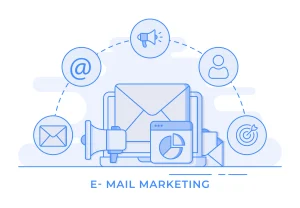 4) Use Automation
Email automation is a key component of successful email marketing campaigns. Most modern email marketing platforms offer automation tools that help businesses deliver timely, relevant communications while reducing manual effort. In today's fast-paced digital environment, customers expect quick responses and personalized interactions, making automation more important than ever.
Once you've built a strong email list and established consistent engagement with your audience, automation can help maintain and strengthen those relationships. Automated responses can immediately acknowledge customer inquiries, reassuring recipients that their questions or concerns have been received and will be addressed promptly.
Beyond customer support, automation can enhance the overall customer experience by delivering targeted messages based on user behavior and interests. Businesses can automatically notify subscribers about new products, special promotions, company updates, and other relevant information. Automation can also be used to gather valuable feedback through customer reviews, surveys, and follow-up communications.
By streamlining routine tasks and delivering more personalized experiences, email automation helps businesses improve efficiency while creating more meaningful connections with their audience.
A/B testing is an effective method for determining which email strategies resonate most with your audience. By comparing different versions of an email, businesses can gain valuable insights into customer behavior, improve engagement, and increase both click-through rates (CTR) and conversions.
To perform an A/B test, begin by selecting a specific element you want to measure, such as open rates, click-through rates, or call-to-action (CTA) performance. Next, create two versions of the same email—Version A and Version B—with one key difference between them. This allows you to identify which variation generates better results.
For example, if your goal is to improve email open rates, focus your A/B test on the subject line. Since the subject line is often the deciding factor in whether an email is opened, testing different wording, lengths, or styles can provide valuable insights. A compelling subject line can significantly increase open rates and set the stage for greater engagement throughout your email campaign.
By continuously testing and refining your email content, you can make data-driven decisions that lead to more effective marketing campaigns and stronger overall performance.
Here are two examples to send out for an A/B testing.
Send Email A to 50% of your mailing lists and send Email B to the other 50%. After the test, simply check the analytics and add up the results of each email to see which of your subject lines resulted in more opens. If there is a clear difference, then you know what works for your client base and you can more effectively plan out future email campaign strategies.
While social media platforms continue to evolve and play an important role in modern marketing strategies, email marketing remains one of the most powerful and reliable channels for building long-term customer relationships. Unlike social media, where algorithms can limit visibility and engagement, email provides a direct line of communication to your audience, giving you greater control over your messaging and customer interactions.
When implemented effectively, email marketing allows businesses to nurture leads, strengthen customer loyalty, increase brand awareness, and drive consistent revenue growth. From welcoming new subscribers and promoting products to sharing valuable content and gathering customer feedback, email serves as a versatile tool that supports every stage of the customer journey.
Success in email marketing requires more than simply sending messages. It involves building a quality subscriber list, creating compelling content, designing user-friendly emails, leveraging automation, and continuously optimizing campaigns through testing and analysis. By focusing on these core elements, businesses can deliver personalized experiences that resonate with their audience and encourage meaningful engagement.
The five strategies outlined above provide a strong foundation for creating high-performing email campaigns. By applying these best practices consistently and adapting to the evolving needs of your customers, you can transform email marketing into a powerful driver of customer retention, sales conversions, and long-term business growth. In an increasingly competitive digital landscape, email marketing continues to prove its value as one of the most effective tools for connecting with customers and achieving measurable results. Contact MSEDP today to learn more about how we can help! Learn more about our email solutions and how they can be a part of your success.
MSEDP is an Office 365 reseller. When you turn to us, you can either purchase Office 365 or Microsoft 365 licenses through Rackspace or use licenses from your existing Microsoft Enterprise Agreement. Our team can help you choose the best solution for your business needs. With MSEDP on your side, you get around-the-clock access to award-winning U.S. based support with unlimited support requests and no per-incident charges with Office 365. Our IT staff is dedicated to helping you 24/7.
Microsoft Office 365 is a versatile cloud-based productivity suite that enhances collaboration, accessibility, and efficiency for individuals and businesses alike. It is a subscription-based suite that brings together a variety of Microsoft Office tools, including Word, Exchange, and Excel, on a cloud-based platform accessible from anywhere. By integrating essential office 365 features with updates in real-time, users gain access to the latest in Microsoft 365 software developments and security enhancements. Some common uses include:
If you are looking to add Office 365 to your applications or want to migrate over, please contact MSEDP today.
Let's take a look at 5 of the best Office 365 features.
As a core component of the Microsoft 365 ecosystem, Microsoft Teams streamlines workplace communication and collaboration while driving greater productivity across organizations. Below are the key capabilities that make Teams indispensable for modern businesses.
Teams integrates seamlessly with Microsoft 365 apps including Word, Excel, and SharePoint, providing a unified collaboration experience. It also delivers enterprise-grade security with features like two-factor authentication, end-to-end encryption, and advanced threat protection.
Microsoft Teams brings together instant messaging, conference calls, and social networking-like features, supported by Skype for Business and Outlook, creating an environment of seamless communication for all team members.
OneDrive is a major component of Microsoft 365's suite that changes the way we store, access, and collaborate on files. Let's take a look at some of the highlights of OneDrive.
OneDrive provides 1TB of cloud storage per user, along with advanced security features like two-factor authentication and threat detection. Microsoft has also extended OneDrive functionality to include Outlook.com attachments across Microsoft 365 apps.
 Outlook is a multifaceted tool that significantly improves email communication and scheduling capabilities for all team members. Outlook's integration within Microsoft 365 offers a seamless experience, which enables users to efficiently manage emails, calendars, contacts, and tasks. Below are some of the standout features that make Outlook a critical component for all types of professionals.
Ransomware detection and recovery, along with two-step verification in Personal Vault, strengthen security. Outlook.com Premium includes phishing protection, email encryption, custom email addresses, an ad-free inbox, and 50 GB of storage.
Email scheduling and emoji reactions simplify communication. Quick Parts and Immersive Reader boost productivity, while shared calendars and unified creation of meetings, tasks, and contacts improve organization and teamwork.
Loop components support real-time collaboration in emails, including editing documents and Excel sheets. Scheduling polls and booking pages simplify meeting setup, while Outlook meeting recaps provide access to files, transcripts, and recordings from calendar events.
Microsoft 365 encompasses a comprehensive array of security features designed to protect against a variety of different threats. Here are some of the more pivotal security features across various Microsoft 365 plans.
When you use Microsoft 365, there is an incorporation of key security tools and policies. Let's take a closer look at six important security tools and policies.
Some of the security features of Microsoft 365 include Microsoft 365 Security Center, Microsoft Compliance Manager and Microsoft Cloud App Security. Let's take a closer look at these three aspects.
Overall, these security features, combined with Microsoft 365's commitment to data encryption, regular backups, and adherence to global compliance standards, underscore our dedication to safeguarding your data and ensuring a secure, productive work environment.
Power BI is Microsoft's premier business analytics tool. It is designed to provide meaningful insights throughout a business. This feature stands out for its ability to deliver interactive visualizations and business intelligence capabilities in a user-friendly interface. Ultimately allowing end users to create their own reports and dashboards with ease.
Power BI offers users some key features and integrations. Let's take a closer look at some important features of Power BI.
Power BI’s integration with Microsoft 365, including native installation with Office applications and embedding capabilities in PowerPoint, highlights its role in strengthening organizational analytics and supporting data-driven decision-making.
E-A-T stands for expertise, authoritativeness, and trustworthiness. The concept comes from Google’s Search Quality Rater Guidelines—a detailed, 168-page document used by human evaluators to judge the quality of search results. Google first made this guide public in 2013 to give website owners insight into what it considers important in a high-quality web page. And it is still a concept that is important to any SEO campaign today and a factor here for the professional SEO writers at MSEDP. Looking for SEO content writing? Turn to the SEO professionals at MSEDP today. Please contact us to learn more about our SEO services and how we can help build your website.
E-A-T is important for all queries, but some more so than others. For example, if you are just searching for pictures of cute puppies, then E-A-T probably doesn’t matter too much. The topic is subjective and it is not vital information.
However, if you are searching for how to install a gate, then the importance of E-A-T raises. If Google were to surface content on this topic written by a clueless writer, published on an untrustworthy website that lacks authority, then the probability of that content being inaccurate or misleading is high. Due to the nature of the information being searched, it is important to get that information right as it impacts the work being done. Or the information that is needed.
E-A-T is also important for queries like “how to improve credit score.” With this search, the advice from the clueless and unauthoritative is unlikely to be legit and shouldn’t be trusted. Google refers to these kinds of topics as YMYL (Your Money or Your Life) topics. This includes types of pages or topics that may impact a person’s future happiness, health, financial stability, or safety. For websites built around this subject matter, then demonstrating E-A-T is vital to its success. At MSEDP, we will tailor content that fits the narrative and purpose of the given website. Ensuring full authority is met on the matter, as we work on a wide range of websites. So our researching and content writing ability meets high standards across the board.
 Probably, maybe? In a nutshell, it is a nuanced topic. For something to be a "ranking factor" for a website, it has to be tangible. An aspect a computer can understand and evaluate. A great example is the number of backlinks to a page. This can be counted and quantified, since Google crawls the web far and wide, so they know how many backlinks point to most pages. Google can easily create a computer program that ranks pages with the most high-quality backlinks.
Which brings us to the problem with expertise, authoritativeness, and trust. These factors are desirable qualities of content, but they are fundamentally human concepts. You cannot tell a computer to rank pages with E-A-T higher because it only understands bits and bytes. It doesn't understand and cannot quantify the expertise on the matter. But Google has a way to solve this problem.
Here are three steps Google uses to solve this problem
With this process in their hands, Google engineers are able to understand the tangible signals that align with E-A-T and adjust the ranking algorithms accordingly.
When it comes down to it, expertise, authoritativeness, and trustworthiness are pretty similar concepts. However, they are not identical and some differences can be parsed as each get evaluated independently using a different set of criteria. Let's take a closer look at these factors.
Expertise refers to having a strong depth of knowledge or skill in a specific area. It’s assessed mainly at the individual content level, rather than across the entire website or organization. Google aims to prioritize content created by someone with genuine subject matter expertise. In general, this is about the formal expertise, qualifications, and education of the content creator. Formal expertise is important as it demonstrates to Google the value of the content and the website as a whole. So when creating the content, that expertise needs to come through. Demonstrating "everyday expertise" and relevant life experience is one way to get that done.
At MSEDP, when we create SEO content, we engage with the clients to ensure the content meets their standards of expertise. Whether it is with a law office, a contracting company, or a retailer, we do the research to make sure the expertise on the subject comes through. Learn more about our SEO content writing.
Authority relates to reputation—especially how a person or website is regarded by other experts and influential voices in the field. In simple terms, it’s achieved when others consistently recognize that source as a trusted reference on a given topic. In order to evaluate authority, raters search the web for insights into the reputation of the website or individual. These raters will use reputation research to find out what real users, as well as experts, think about a website. And ultimately, they will look for reviews, references, recommendations by experts, news articles, and other credible information created/written by individuals about the website. At MSEDP, these are the standards we hold for our SEO team and the content writing. Our staff prides itself on the research completed and how that research gets translated into high-quality and informative content.
However, it is important to remember that authority is a relative concept. It is also the case that some people and websites are uniquely authoritative when it comes to certain topics. When someone lands on a landscaping website, the user will likely believe they are an authority on those matters. They wouldn't look to them for legal advice, but rather advice on how to trim hedges or mow a lawn.
Trust focuses on how legitimate, transparent, and accurate a website and its content appear. To assess this, raters consider several factors—such as whether the site clearly identifies who is responsible for the information it publishes. Many websites demand a high degree of trust, so they generally need satisfying information about who is responsible for the content of the site. Here are three factors that improve the trustworthiness of a website.
In the end though, trustworthiness, like authoritativeness, is a subjective idea. Websites and, subsequently, people, cannot be perceived as trustworthy all the time. MSEDP is a trustworthy source for SEO and web services as the professionals here work on this daily. However, we would not be trustworthy about dog adoption on Long Island. So it is important for any user or client to understand the limits of trust and how it impacts a website.
As of 2026, cloud computing has progressed well beyond basic online storage and remote hosting. It has become a sophisticated, interconnected ecosystem that supports nearly every area of modern business and technology. Today, cloud computing refers to delivering a wide range of computing services. These services include servers, storage, databases, networking, software, analytics, and AI capabilities over the internet. Rather than relying on local machines or on-site infrastructure, organizations now depend on scalable, distributed cloud platforms that are often enhanced with artificial intelligence. Key features of cloud computing in 2026 now include the following:
In 2026, cloud computing is no longer just IT infrastructure. It is the backbone of digital transformation. Businesses rely on it to run AI applications, process massive datasets, support remote and hybrid work, and innovate faster than ever. Turn to MSEDP today to get the most out of your cloud computing. Contact us today to learn more about cloud computing and its benefits for your business.
The classic IaaS, PaaS, and SaaS model still exists in 2026. However, now these models exist with modern enhancements:
Leading cloud providers now deliver solutions for nearly every need—from networking and email services to container management and serverless architectures. If your applications are delivered over the internet, cloud infrastructure is likely already central to your operations. For that reason, keeping up with the latest cloud computing trends in 2026 is more important than ever. Here are some of the more notable current trends in cloud computing.
Cloud computing trends for 2026 suggest that very few organizations will run AI workloads on their own infrastructure. This includes training custom large language models, deploying chatbots, powering recommendation systems, handling image recognition, performing natural language processing (NLP), or conducting predictive analytics.
For most use cases, cloud-based AI services offer a far more practical and cost-effective alternative to building and maintaining in-house systems. This efficiency is largely driven by the cloud’s pay-as-you-go model, which allows organizations to avoid heavy upfront hardware investments and instead pay only for the resources they consume, when they need them.
Overall, every organization has their own unique needs. And cloud computing trends show that some organizations use AI to optimize their sales development (SDR) pipelines, while others leverage it for business forecasting. This is where model training becomes important. Instead of relying on pre-trained, generic models, many companies now train custom ML models tailored to their data and objectives.
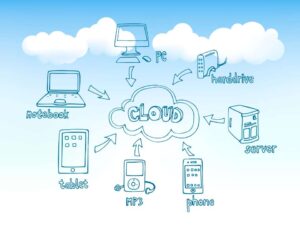 Even with a basic understanding of cloud computing, it’s clear there’s no single provider that fits every need. Still, organizations require a wide range of services. So, how do they handle this? The answer that has emerged is multi-cloud deployment, which is quickly becoming the standard approach.
That said, managing multiple platforms is far from simple. Challenges around policy enforcement, cost visibility, and governance remain significant. As a result, organizations are increasingly adopting automation tools and cloud management platforms from the outset to streamline operations.
At the core of the multi-cloud strategy are two key advantages: resilience and redundancy. If one provider experiences an outage or shifts its pricing, businesses can rely on alternative platforms to maintain continuity and avoid disruption. Ultimately keeping everything up and running without incident.
To meet the growing demand for cloud services, cloud providers continue to expand their infrastructure by building larger and more numerous data centers. Overall, an expected development in the industry. However, this rapid growth is beginning to strain the local environments where these facilities are located. Among the most significant impacts is the heavy use of groundwater, followed by increased energy consumption and emissions, and the accumulation of electronic waste.
Based on current cloud computing trends, monolithic architectures are quickly becoming a thing of the past. By 2026, the transition to cloud-native development is expected to be fully realized, with applications designed from the ground up using microservices, containers, and serverless technologies.
This approach enables faster scalability, simpler updates, and minimal downtime. With modern development tools on hand, teams can build, test, and deploy features independently, making the entire process more efficient and flexible.
Hybrid environments are a major trend in cloud computing for 2026, combining on-premises systems with public cloud platforms. This approach is gaining traction because it offers the advantages of both aspects. It has greater control over local infrastructure alongside the scalability and flexibility of the cloud.
Industries such as finance and healthcare are increasingly adopting hybrid models to meet regulatory requirements while still scaling efficiently. Sensitive data and critical workloads remain on-premises, while resource-intensive tasks are handled in the cloud, helping organizations stay agile while managing costs effectively.
Transmitting large volumes of data to centralized cloud servers for processing can introduce latency and increase costs. Edge computing addresses this challenge by moving computation closer to the source of the data, enabling faster and more efficient processing.
As a result, organizations benefit from quicker response times, lower latency, and reduced bandwidth consumption. Sectors such as logistics, manufacturing, and healthcare are already leveraging edge computing to support real-time decision-making without relying solely on distant cloud infrastructure.
For many organizations, cloud expenses are becoming a more significant part of overall budgets. As a result, cost optimization is no longer just a concern for engineering teams. It is also increasingly becoming a priority at the executive level and a key topic in C-suite decision-making. While issues like unoptimized architecture, improper rightsizing of resources, and incorrect billing models have always been relevant, the cloud computing trends with respect to key cost drivers in 2026 are as follows:
If you are looking for dependable, yet affordable, cloud computing services, turn to MSEDP today. Check out all of our IT services to learn more about how we can help your business.
Managed IT services have evolved far beyond basic helpdesk support and routine patch management. In 2026, a true managed services provider serves as a strategic operational partner—delivering reliability, security, and accountability through defined standards, advanced tools, and consistent, repeatable processes. This blog outlines what modern managed services should include, what organizations can reasonably expect, and how to distinguish between simple break-fix support and a fully developed managed IT program. Turn to MSEDP for a professional managed service provider on Long Island, New York. Contact us today to get started!
Ten years ago, many businesses could get by with a break-fix IT model and a basic antivirus subscription. However, that approach no longer holds up in 2026, since both risk and complexity have increased dramatically over the years. Cloud platforms now power daily operations, identity has replaced the traditional network perimeter, third-party vendor access is continuous, and cybercriminals frequently exploit legitimate tools to hide within normal activity. The bottom line is clear in this new day and age: system reliability and cybersecurity are now inseparable.
If your IT provider is simply responding to tickets, you are not receiving managed services. Rather, you are paying for reaction time. True managed IT is a structured program, not a single technician. It is grounded in defined standards, proactive monitoring, lifecycle management, layered security controls, and measurable accountability. A modern provider takes responsibility for the outcomes that matter to leadership: consistent uptime, reduced risk, predictable budgeting, and the ability to implement changes without disrupting operations. When you turn to MSEDP for managed services, you get an MSP who goes above and beyond for all clients. Both big and small.
Managed IT services are often sold as a list of tasks. Framing it that way is convenient. However, it is not the whole picture and how leadership ultimately evaluates value. A modern MSP should talk about outcomes and the operating model that produces them. In practice, the business outcomes look like this:
If you want that decision clarity, a professional MSP pairs operations with executive guidance. At MSEDP, you get a managed service provider who understands these aspects and puts them into practice.
A professional managed services program has several layers working together. If you only see one layer, then you are exposed. Below are the basics a well-run managed IT service provider, like MSEDP, delivers as part of their overall operations.
 The costliest IT breakdowns are seldom sudden or spectacular. More often, they result from gradual decline. Examples include uneven device setups, undocumented modifications, scattered vendor tools, and unmanaged user accounts. Over time, these small inconsistencies compound into serious operational and security risks.
A modern managed services provider addresses this by defining clear, written standards and applying them consistently across endpoints, identity systems, email platforms, backups, networking, and change management. MSEDP strengthens this foundation through documented IT standards, structured policies, and formal security governance. All supported by practical guidance shaped by real-world operational experience.
Today’s IT environments generate a constant stream of data. This includes device performance metrics, authentication activity, email threat signals, backup reports, network health indicators, and broader security telemetry. Effective monitoring goes far beyond viewing a dashboard. It requires structured alerting, proper triage, and timely response to stop minor issues from escalating into operational disruptions.
Strong monitoring begins with maintaining system stability and then extends into proactive threat detection and coordinated incident response. Get 24/7 monitoring when you turn to MSEDP as your MSP!
Helpdesk quality matters because users are the production line for most businesses. A modern helpdesk is not only a ticket queue. It is a structured service with triage, escalation paths, and documentation that reduces repeat issues. You should expect clear response expectations, consistent communication, and the ability to escalate onsite when remote work is not enough. MSEDP provides this layer through our helpdesk, as well as with our onsite technicians. Proudly supporting businesses with local availability on Long Island and the greater New York City area.
Endpoints are still where most security risks become real-world consequences. This is where device configuration, patch management, access privileges, encryption, and advanced endpoint protection must all work together. The gap between basic IT operations and a mature program comes down to consistency and whether systems are properly hardened and continuously maintained over time.
MSEDP addresses this through structured endpoint management focused on strengthening security in practical, sustainable ways. All without disrupting everyday business operations. Keep your business operating smoothly with us as your MSP.
In 2026, identity protection sits at the center of any secure IT environment. Email account takeovers, reused passwords, suspicious login activity, and overly broad access rights remain the quickest paths attackers use to move laterally within an organization.
A modern managed services program must therefore include enforced multi-factor authentication (MFA), conditional access policies, strict privileged access management, and well-defined account provisioning and deprovisioning processes. When identity controls are weak, every other layer of security is significantly undermined. Our cybersecurity services are reliable and will keep your network safe.
Email continues to be the starting point for most business security incidents. In today’s environment, protecting email goes well beyond basic spam filtering. It requires proper tenant configuration, advanced anti-phishing controls, strong authentication standards, and active monitoring for unusual or suspicious activity. Effective protection also includes policies that restrict dangerous forwarding rules, unauthorized third-party app access, and overly permissive external sharing.
MSEDP approaches this through a focused email and collaboration security framework, leveraging these controls and best practices to help safeguard your organization’s network and communications environment.
Backup is more than a simple compliance item. It is a structured business continuity practice built around defined recovery objectives, documented restore procedures, and routine testing. In 2026, ransomware attacks and account takeovers often target backup systems and cloud data channels specifically, making resilience more critical than ever.
A modern managed IT program ensures backups are secured, continuously monitored, and fully recoverable when it matters most. That’s why MSEDP treats managed backup and disaster recovery planning as a foundational operational component, not as an afterthought.
Networks naturally degrade over time. This means firmware becomes outdated, configurations are changed without records, and guest access can inadvertently reach critical systems. Even well-managed environments are vulnerable to downtime and security gaps if these issues are not addressed.
A mature managed services program incorporates continuous network monitoring, proper segmentation, configuration backups, and disciplined firewall policy management. MSEDP delivers this through its managed network and firewall services, focusing first on stability and then implementing lasting security improvements that stand the test of time.
The click-through rate for a website is a crucial element for any website. Having users see your website while scrolling on Google is one thing, but actually clicking on the listing is another. Improving the organic CTR involves a mix of SEO enhancements, technical optimizations, and content strategies. Below is a collection of tips and best practices that can boost click-through rates and help websites grow organic traffic. At MSEDP, our SEO services aim to satisfy these queries and improve the click-through rate by using these best practices. For more clarification on these aspects, please reach out to MSEDP. Our web professionals will answer any questions you may have regarding click-through rates and their subsequent impacts.
The title tag is a critical factor for both SEO and organic CTR. As the first element users notice in search results, it plays a major role in determining whether they choose to click on your listing. You can do this by including the target keyword near the beginning of the title to clearly signal relevance to both search engines and users. At the same time, keep the title descriptive and concise so it accurately represents the page content. Aim for fewer than 60 characters to ensure it displays fully in search results without being truncated. At MSEDP, we use tools to preview how the title will appear in Google’s SERPs.
It is also important to use emotional triggers, which helps to optimize title tags. In general, words like “ultimate," “essential,” and “easy” can provoke curiosity or urgency, making users more likely to click. However, it is important to avoid duplication. Each page on a website should have a unique title tag to prevent confusion in search rankings, while keeping each page unique. Lastly, A/B testing can prove worthwhile when landing on the best title tags. We will experiment with different variations of the titles to see which perform the best.
Overall, a compelling title tag can make the difference between a user clicking on your result or choosing a competitor’s. And in general, title tags help search engines understand what your page is about and are a critical factor in ranking. Optimizing your title tags is a straightforward but powerful way to improve organic CTR, helping drive more traffic to your site without requiring additional time or resources.
Although meta descriptions do not directly affect SEO rankings, they play a key role in influencing organic click-through rates. A well-written meta description serves as a mini advertisement for your page, encouraging users to click through from the search results. For the most part, a compelling meta description can distinguish between a user clicking on your listing or continuing to scroll. And while not a ranking factor, a good meta description can increase the visibility of your keywords when they are bolded in search results, aligning with specific user queries. All this leads to improved SEO in general.
Here are a few ways in which to best optimize meta descriptions.
In the end, a well-optimized meta description can improve click-through rates. They provide a better understanding of the webpage content and encourage more qualified clicks.
A well-structured URL not only helps search engines understand the relevance of your content, but it also influences user perception. This makes it an essential factor for improving click-through rates. When a website has clean and descriptive URLs, it gives users a clear idea of what to expect on the page and while going through the website in general. Overall, improving the URL structure increases the likelihood of clicking on the link. On top of that, well-structured URLs can enhance SEO efforts by including relevant keywords that further align with search queries and boost CTR.
Enhancing URL structure can greatly improve both user experience and SEO. URLs that are clear, descriptive, and relevant to your target keywords are more likely to attract clicks and boost your site’s visibility in search results.
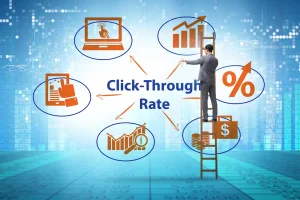 Since mobile internet usage continues to rise, having a mobile-optimized website is essential for delivering a strong user experience and improving click-through rates. Mobile optimization enhances usability and performance, which can directly boost organic CTR. Sites that are optimized for mobile often see a noticeable increase in CTR compared to those that are not. In general, Google indexes websites based on their mobile version first. What this means is that a well-optimized mobile site is essential for good SEO performance. And not for nothing, but a mobile-friendly website provides a better browsing experience, reducing bounce rates and potentially increasing CTR from mobile users.
Optimizing your site for mobile is crucial in today’s mobile-first world. Not only does it improve SEO, but it also enhances organic CTR, as the majority of users are likely to access your site from their mobile devices.
Grasping and aligning with the user intent behind search queries is key to boosting a website's click-through rates. When content accurately meets what searchers are seeking, they are far more likely to click on a link in the search results. With increased relevance, you will have content that matches user intent. Which in turn is more likely to satisfy the searcher’s needs, thus lead to higher engagement and CTR. And ultimately, leading to better rankings since Google prioritizes content that best satisfies user intent. The SEO staff at MSEDP specializes in content writing and knows how to ably focus on user intent.
Optimizing for user intent enhances click-through rates and improves the overall user experience. Any website is more likely to fulfill visitors’ needs and encourages them to return if it is geared towards the intent of the user.
Refreshing and updating old content is a powerful way to boost click-through rates. Refreshing older content keeps all information accurate and relevant while signaling to search engines that the content is up to date, which can enhance overall rankings and attract more clicks. When the content is refreshed, it boosts overall relevance, too. Updating the information, statistics, and resources ensures all content remains relevant to current search queries. In turn, this improves the rankings since search engines favor recently updated content. And when it is all said and done, refreshing old content enhances user engagement. Fresh and relevant content is more likely to engage visitors, which reduces the overall number of bounces while potentially increasing click-through rates.
By regularly refreshing old content, you are ensuring your site remains competitive and relevant, which boosts overall click-through rates and improves overall user satisfaction.
Cyberattacks grew in both frequency and scale in 2025. And there’s little reason to expect much relief in 2026. Emerging technologies such as agentic AI and quantum computing are expanding the playing field, empowering defenders and adversaries alike. Ultimately, humans remain both the weakest link in cybersecurity and its most powerful line of defense. Through all of this, there are emerging trends to watch out for in 2026 that may fuel cybercrime over the next 12 months.
Below we will get into those cyber security trends to prepare for in 2026. If you are looking for a defense against cybercrime, do not hesitate to reach out to MSEDP! We have the cyber security services to keep your business safe and secure. And with our team at the helm, you will stay ahead of the upcoming trends!
Attacks that involve encrypting or otherwise locking away critical business data and demanding payment for its release continue to rise. All of which are indicators that suggest they will grow even more sophisticated in 2026. The barrier to entry for cybercriminals is steadily eroding, driven by the rapid expansion of ransomware-as-a-service (RaaS) ecosystems that allow even minimally skilled attackers to launch highly effective campaigns using turnkey tools, customer support, and profit-sharing models.
At the same time, advances in artificial intelligence are amplifying the effectiveness of these attacks. Deepfake audio and video, as well as AI-generated phishing content, are making social engineering far more convincing, enabling attackers to impersonate executives, vendors, or trusted partners with unprecedented realism. Thus bypassing traditional human safeguards. These techniques dramatically increase the likelihood of successful initial compromise and subsequent lateral movement within an organization.
Compounding the problem, the emergence of new privacy-focused and harder-to-trace cryptocurrencies is simplifying the financial side of cybercrime. These digital currencies make it easier for attackers to transfer, launder, and ultimately spend extorted funds while minimizing exposure to law enforcement or regulatory scrutiny. Together, these trends are transforming ransomware from a niche criminal activity into a highly professionalized, scalable, and resilient business model. A model that organizations must assume will remain a persistent and escalating threat throughout 2026 and beyond.
Despite major advances in cyber security technology, human beings remain the most vulnerable component of any security infrastructure. For cybercriminals, manipulating human behavior, whether it is through deception, coercion, bribery, or blackmail, is often far more effective than attempting to defeat hardened technical controls. Stolen or willingly surrendered credentials continue to provide attackers with the easiest path into otherwise well-defended systems, allowing them to bypass layers of security with minimal resistance.
As these tactics become more refined and personalized and then enhanced by AI-driven reconnaissance and social engineering, organizations are being forced to rethink how they address human risk. In response, businesses are expected to invest far more heavily in comprehensive security awareness initiatives. This includes ongoing employee education, realistic simulations of phishing and other social engineering attacks, and role-specific training that reflects the real-world threats employees are most likely to encounter.
Beyond training, leading organizations will focus on cultivating a culture of shared responsibility for security. This means normalizing cautious behavior, encouraging employees to report suspicious activity without fear of blame, and embedding security considerations into everyday workflows. In 2026 and beyond, companies that treat their workforce as an active line of defense rather than a liability to be managed will be far better positioned to withstand increasingly sophisticated cyber threats.
AI agents are rapidly emerging as the new frontline in the cybercrime battlefield. Unlike traditional automated tools, these agents can operate autonomously, adapt to changing conditions, and seamlessly interact with third-party services and digital environments. For attackers, this unlocks an unprecedented level of scale and sophistication. AI agents can continuously probe networks for vulnerabilities, test defenses in real time, and refine their tactics based on observed responses. They can also orchestrate highly targeted, evolving social engineering campaigns. Doing so by adjusting language, timing, and impersonation strategies on the fly to exploit human trust and organizational blind spots.
At the same time, these same capabilities offer defenders a powerful new arsenal. Security teams can deploy AI agents to monitor systems continuously, correlate signals across vast data sets, and respond to threats autonomously. They can complete these tasks faster than human analysts could intervene. Defensive agents can isolate compromised systems, roll back malicious changes, and even predict likely attack paths before they are exploited.
In 2026, the widespread adoption of AI agents represents the latest and most consequential escalation in the cybersecurity arms race. As both criminals and enterprises race to deploy increasingly autonomous systems, the margin for error narrows and the pace of attacks accelerates. Success will depend not only on having advanced tools, but on how effectively organizations govern, train, and integrate these agents. In this new landscape, speed, adaptability, and decision-making autonomy will define who gains the upper hand.
Deepfaked audio and video are opening dangerous new avenues for cyber attackers, enabling them to convincingly impersonate trusted individuals such as executives, colleagues, or business partners in order to gain access to secure systems or authorize sensitive actions. These synthetic media techniques allow criminals to replicate not just a person’s appearance or voice, but also their speech patterns, tone, and mannerisms. Altogether making fraudulent communications far more persuasive than your traditional phishing emails or text messages.
There have already been documented cases in which employees were deceived into transferring large sums of money after receiving spoofed phone calls or video messages that appeared to come directly from their manager or senior leadership. As the underlying technology continues to improve and becomes increasingly indistinguishable from authentic human interaction, such attacks are likely to grow both in frequency and financial impact.
Compounding the risk, deepfake-enabled attacks exploit organizational trust and urgency, often pressuring victims to act quickly or bypass standard verification processes. In the years ahead, businesses will need to assume that seeing or hearing a familiar face or voice is no longer sufficient proof of identity. Mitigating this threat will require stronger verification protocols, multi-person approval for high-risk actions, and employee training designed specifically to recognize and respond to AI-driven impersonation attempts.
Quantum computing promises to revolutionize entire industries by solving complex problems in seconds that would take today’s most powerful classical computers centuries to complete. Breakthroughs in areas such as materials science, drug discovery, logistics, and financial modeling could reshape how organizations innovate and operate. Yet this same leap in computational power also presents a profound challenge for cybersecurity.
Many of the encryption methods that currently protect sensitive data and digital communications rely on mathematical problems that are effectively unsolvable with classical computing. Quantum computers, however, threaten to render these protections obsolete. Cybercriminals are already anticipating this shift by harvesting and stockpiling encrypted data today. Ultimately betting on a future in which quantum capabilities will allow them to decrypt it retroactively.
As a result, 2026 is likely to mark a critical transition period. Organizations will need to assess where quantum vulnerabilities exist within their systems, data stores, and third-party dependencies. On top of that, they will need to begin migrating toward quantum-resistant cryptographic standards. A delay in this transition increases the risk that sensitive information compromised years from now could expose secrets thought to be safely locked away. Preparing for a post-quantum world will require foresight, investment, and coordination. However, waiting until quantum threats are fully realized may already be too late. Get an IT Team like MSEDP on your side to serve as your protective shield!
Regulators and lawmakers have consistently struggled to keep pace with the speed and sophistication of modern cybercrime. The challenge is not primarily about punishing criminals, who rarely operate within the reach of national laws. However, it is more about compelling organizations to take stronger responsibility for safeguarding the sensitive data they collect and manage. As cyber incidents grow in scale and impact, governments are increasingly shifting their focus toward accountability, transparency, and resilience at the corporate level.
Recent regulatory efforts reflect this shift. Measures such as the U.S. Securities and Exchange Commission’s enhanced cyber disclosure requirements are designed to force greater transparency by requiring companies to formally document, assess, and report material cyber incidents. Similarly, there is a European Union’s directive that significantly broadens the range of organizations subject to cybersecurity obligations. This directive mandates improved risk management practices, incident response capabilities, and operational resilience across critical and non-critical sectors alike.
While these frameworks aim to raise the baseline level of security and preparedness, their overall real-world effectiveness remains uncertain. Compliance does not automatically translate into stronger defenses. On top of that, there is a risk that some organizations will treat these requirements as a box-checking exercise instead of a catalyst for meaningful change. As cybercriminals continue to innovate and industrialize their operations, the true test for regulators will be whether these measures can drive sustained improvements in security maturity. If not, data theft and extortion will continue to outpace the laws designed to contain them throughout 2026 and beyond.
An IT disaster recovery plan outlines the strategies, procedures, and protocols a company follows to restore its IT systems and infrastructure after a disruptive event. Its main goal is to recover critical services, restore data, and return business operations to normal following incidents such as cyberattacks, hardware failures, natural disasters, or even human error. A well-crafted plan reduces downtime, minimizes risk, safeguards data integrity, and supports overall business continuity.
When you turn to MSEDP, we can help you develop a disaster recovery plan. Get your business back up and running quickly after a data loss with MSEDP’s comprehensive disaster recovery services. Threats like viruses or power outages can be just as damaging to your systems as a major fire or flood. Our backup and disaster recovery (BDR) solutions safeguard your company’s programs and files, ensuring they can be restored fast when an unexpected crisis occurs.
MSEDP provides disaster recovery, data backup protection, and a full range of IT support services for businesses on Long Island, throughout New York, and across the United States. Protect your data—and your website—with reliable, proactive solutions.
IT disasters can occur without warning, threatening business operations and leading to major data loss. With a strong IT disaster recovery plan in place, organizations can maintain business continuity and significantly reduce downtime when these events happen. An effective plan should outline clear protocols for data backups, recovery steps, and internal and external communication. It’s also essential to regularly test and update the plan to address new risks and ensure it remains effective. The IT team at MSEDP will work with you every step of the way during the development of an IT disaster recovery plan. Ensuring all aspects are properly covered.
IT disaster recovery planning is crucial for businesses for various reasons. Here are five key reasons why IT disaster recovery planning is important for businesses both big and small:
Businesses can employ various IT disaster recovery strategies to ensure business continuity. Here is a rundown of some of the more common strategies for disaster recovery.
When you turn to MSEDP for your disaster recovery needs, we can pinpoint the right strategy and implement it effectively. Our IT team has years of experience handling disaster recovery efforts and can quickly draw up a strategy that works for your business.
 Before beginning the implementation of a disaster recovery plan, it is important to understand the key components driving the plan. This sort of template provides structure for the elements and will help any business thrive by fully understanding the details that go into planning for disaster recovery efforts. Here are the key components for general disaster recovery planning. At MSEDP, we will tailor the plan to meet your specific needs.
Clearly defining backup procedures is essential to ensuring your business consistently and securely protects its critical data. Performing regular on-site and off-site backups allows for reliable data restoration in the event of loss or corruption. Utilizing a mix of full, incremental, and differential backup strategies helps safeguard important information, reduce recovery time, and maintain data integrity.
Information systems play a central role in effective data backup and recovery. They provide the infrastructure and tools needed to manage data, communications, and operations before, during, and after a disaster. With automated backup capabilities, real-time monitoring, and rapid data restoration, these systems help ensure that key business functions can resume with minimal disruption.
To better understand your company’s risks and prioritize recovery efforts, it is vital to conduct a thorough risk assessment. This assessment identifies potential threats and vulnerabilities within IT systems and its infrastructure. This assessment typically evaluates both on-premises and data center environments. By doing so, the risk assessment is able to provide a complete picture of possible disaster scenarios.
Along with identifying vulnerabilities, a risk assessment should also measure the likelihood and potential impact of each risk on business operations. This allows for the prioritization of threats and the allocation of resources where they’re needed most.
A continuity plan involves developing strategies to ensure the uninterrupted operation of critical business functions during and after an IT disaster. These continuity plans identify alternative processes, resources, and recovery procedures in order to maintain all operations. Having a well-defined disaster recovery plan and procedure outlines the steps to restore critical systems and data, ultimately ensuring smooth and efficient recovery.
In general, continuity plans include three elements:
Alternative processes involve identifying and documenting alternative workflows in order to keep critical functions up and running. Resource allocation ensures all necessary resources, such as personnel and equipment, are available and can be quickly mobilized. Lastly, recovery procedures require outlining specific steps in order to restore IT systems and data. Then there is also the need to select a disaster recovery site, which is a secondary location where a company can recover its IT infrastructure and resume business operations during a disaster. This site needs to be far away from the primary location. By doing so, it minimizes the risk of being affected by the same disaster. All of these elements work together and help to ensure the continuity plan is effective once implemented.
Communication plans establish notification procedures and communication channels to ensure that internal and external stakeholders are informed and coordinated during any disaster recovery efforts. Having effective communication plans in place manages expectations, provides updates on the recovery process, and maintains trust during a disaster.
Regular testing and training exercises are essential for validating the effectiveness of a disaster recovery plan, as it ensures employees are prepared to respond. Drills and simulations help uncover weaknesses and areas that need improvement, which makes sure the plan performs as expected during a real disaster. Following each test—or any actual incident—IT teams can create postmortem reports to document findings. These reports offer valuable insights into the plan’s strengths and shortcomings, supporting ongoing refinement and continuous improvement. At MSEDP, we will work with you to make sure that you have the right training to help in case there is a problem.
© Copyright 2021 Mannino Systems. All Rights Reserved